
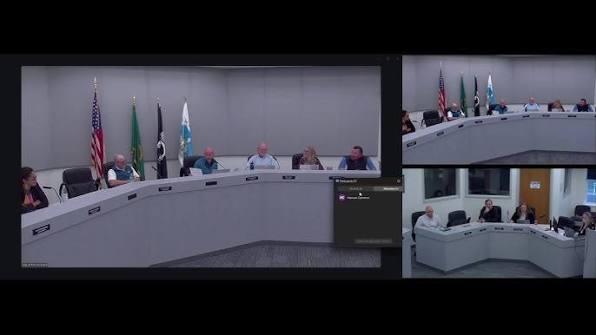
This is a commentary regarding the developing story out of Port Orchard involving the resignation of Councilmember Heidi Fenton. This story incorporates the problems that we find in most of the stories that publish – government lack of transparency and using Work Sessions as a means to work around public participation in making decisions.
While other outlets have covered only the basic outline, we’re going to walk through the full background so our audience can understand exactly what’s being disputed, why it matters, and what happened when the public finally got its say.
The City of Port Orchard is governed by a seven-member city council plus the mayor. At the time these events began, the council consisted of five men and two women. That detail has become relevant to some of the accusations now being raised.
It all started in a closed executive session on June 16th. According to the majority of the council and the city attorney, Councilmember Heidi Fenton verbally offered her resignation that night after allegations were presented to her. According to statements made, it appears the allegations included claims that she attended council meetings while being intoxicated and that she had been accused of unwanted touching of a staff member, specifically that she had “grabbed his arms.”
Councilmember Shirah Dedman had already left the executive session earlier because she objected to how it was being conducted and felt that the content of the meeting violated the Open Public Meetings Act. The remaining council members decided to continue the meeting. During that session, the council members and the city attorney all state that Fenton said the words “I resign.” Citing a previous Washington court ruling, they maintain that the resignation became effective upon her stating that she resigned and her seat was then immediately vacated on the spot.
After declaring the seat vacant, the city posted the opening and began taking applications for the vacancy. The council made numerous statements indicating that they had 90 days to fill the seat before it would be turned over to the Kitsap County Commissioners and that it was imperative that the council decide how to fill the vacancy. In this regard, I would just like to suggest that, considering all the issues related to her resignation, maybe the best solution would have been for the County Commissioners to fill the vacancy. This would help alleviate any accusations that the council was simply using this as a pretext to fill the seat with someone they want, rather than what the people wanted.
That brings us to the July 13th public meeting — the night everything boiled over. After the June 16th meeting, the public became aware of the circumstances regarding the resignation and a large group of citizens decided to show up at the regular council meeting on July 13th. Dozens of citizens filled the room.
The meeting opened with immediate drama. Councilmember Heidi Fenton attempted to take her seat at the dais. Mayor Rob Putaansuu ordered her to leave, stating she was no longer a member of the council. That triggered a heated exchange, especially between Councilmember Dedman and the rest of the body. Dedman objected forcefully to Fenton’s removal.
A short time later, Councilmember John Morrissey made a motion to censure Dedman for her comments and actions related to the issue. Morrisey cited that Dedman had misrepresented the facts at the meeting and made them public. After some sharp back-and-forth comments, the censure motion failed 3 -2 with Councilmembers Dedman, Scott Diener, and Eric Worden voting against it.
When public comment opened, Heidi Fenton spoke first and laid out her side of the story. From that point forward, speaker after speaker supported restoring her to the council. The comments were, by all accounts, unanimous in that direction. There were multiple outbursts from both the audience and from the dais as this issue was being addressed. The mayor had to call for order more than once. The emotion in the room was unmistakable and several council members remarked about the intensity in the room.
In her statement, Councilmember Fenton stated how she was “bullied” by other councilmembers and pressured into resigning. She also stated that the intoxication allegation was “defamation”. During the discussion on the issue Councilmember Dedman also disputed the viability of the allegations. They both argued that the proceedings violated the Open Public Meetings Act, and that any resignation statement was made under duress. Fenton herself maintains she said something closer to “I think that I should resign” rather than a clear “I resign.” The council’s position is that either version still qualifies as a resignation under the law. Since the meeting was a closed session, there are no recorded statements regarding what was actually stated, however, the several council members stated that all of the people that were attending the remainder of the June 16th session clearly heard Councilmember Fenton resign.
During the public comment period, four main points were brought up by multiple attendees. These points were:
First — that Fenton’s seat was improperly or illegally vacated.
Second — that the council was effectively removing a duly elected official without meaningful public input or oversight.
Third — that the June 16th executive session violated the Open Public Meetings Act, which would make the actions taken that night invalid.
Fourth — that the process used to obtain the resignation amounted to intimidation and duress. Several public members warned that if Fenton pursued legal action, the city could face a long and expensive court case, and they urged the council to seek independent legal advice from an experienced litigation attorney before taking any further steps. They stated that it was not a matter of “can” the council proceed with their actions, but “should” they pursue this course considering possible major legal battles.
During the meeting some council members offered more details about the circumstances that created the resignation. Morrissey stated that the public did not care “how many times Ms. Fenton showed up at these meetings intoxicated”. Councilmember Diener stated “I have personal evidence of Heidi being intoxicated at a meeting”. Both made these statements but offered no additional evidence. Dedman accused the council of making unsubstantiated claims regarding Councilmember Fenton. Later Councilmember Diener stated that the council had given Fenton an ultimatum: resign, or the accusations against her would be pursued. These statements drew more outbursts from the audience and from Councilmember Dedman since they seemed to confirm their concerns regarding intimidation and duress to force the resignation. The mayor again had to step in to restore order.
Councilmember Eric Worden said that because the city attorney had advised them on the proper course of action, the council should simply follow that legal advice. Dedman asked if the legal advice provided possible outcomes such as litigation issues. It appeared from her statements that Councilmember Dedman was not included in that legal advisory. The question went unanswered, but the other council members stated that they were committed to following the city attorney’s advice simply because they were not attorneys. I personally do not hold that position. Just like in medicine, if person receiving advice from a licensed professional thinks that the advice is wrong, they should seek other opinions. Attorneys are not infallible. Attorneys that are not experienced in litigation should be questioned when offering advice outside of their expertise. Considering the potential legal issues, it would seem prudent for the council to seek outside legal advice from an experienced litigation attorney before pursuing any actions. If Councilmember Dedman is correct and the legal advice did not include possible litigation outcomes, then that is a clear sign that a second or third opinion was needed and the council members were not being responsible stewards in representing the people if they did not follow up on all legal consequences.
The meeting ended without any formal action to reverse the vacancy or change course. A few members did say they were open to holding a future public meeting to address the issues more fully, however, no specific actions were decided. Actions taken by the council since that meeting would indicate that they are proceeding to fill the vacant seat.
After the meeting, several residents said they were looking into a possible recall effort and that they would support Fenton if she decided to take legal action against the city, the council, or the mayor unless she is restored to her seat. There were also conversations among some attendees about whether the council has treated its female members differently. Councilmember Dedman herself raised concerns that these actions appeared to be directed at the only two women on the council.
We looked into the practical side of a recall. Under Washington law, the bar is high, and most observers believe a recall effort would face steep challenges. Still, the political and financial costs of even attempting one are real, and council members and the mayor would be wise not to dismiss that possibility lightly.
On the question of lawsuits, it’s important for residents to understand something clearly: if a lawsuit were filed and succeeded, the damages would almost certainly be paid by the city — meaning by the taxpayers — not by the individual council members or the mayor out of their own pockets. That reality is why many of the speakers argued that night that the public deserves a real voice in how this is resolved. Some stated afterwards that, even if the resignation was valid, was the council considering all the costs and issues of litigation and should they reconsider their action solely based on what was best for the citizens and the city? Even if the lawsuit was not successful, it still could cost the city hundreds of thousands of dollars to defend itself. Voters in Port Orchard need to let their elected officials know that, while they are immune from personal lawsuits, they are not immune from being politically accountable for their actions and that litigation costs that could have been avoided will have a major impact on how they will vote in the next election.
Now, this is where the issue of transparency comes into play and we start to see the political games that our elected officials like to play. At the July 21st Work Session meeting, the council decided to readdress the censure against Councilmember Dedman and bring it up for a vote again. At this meeting, there was no one in the audience (as is typical with most work session meetings). This time, the motion was passed and Dedman received an official censure and reprimand from the council. The vote was 5-1, with Dedman the only person voting against it. Some of the public are asking why did they decided to conduct the censure at the work session instead of an open public regular meeting that has better attendance and more notice for the public to attend? While censures and reprimands are authorized by city code to be done at work session meetings, doing so can raise issues with proper citizen participation and input, especially when the meeting involve reversing a vote that was done in the public meeting and in consideration that there are already issues being raised regarding the OPMA and decisions being made outside of public view. The optics of voting one way in a public meeting that the audience is supporting, then voting the opposite way when the public is not in attendance does not seem like a transparent and open process that takes citizen input into consideration. This is also not the first time that KMJC has reported about how elected officials say or do one thing in the public sessions and reverse their actions in the work sessions.
I want to be very clear about KMJC’s position. We are not making any statements about the legality of the resignation. While Councilmember Dedman did bring up some very good points regarding the legality of the process, including that although there is a precedent, the conditions of this particular resignation were different and may not apply and that it would appear from her comments that the city attorney did not advise them of these issues, there is also good evidence that the Munroe-City of Poulsbo court decision (which was cited by the city attorney) is applicable.
We want to hear from you. What are your thoughts on this situation? Leave a comment on our website or on the platforms where you listen to our podcasts and videos. Your input helps us understand what matters most to the people who live with these decisions every day. More importantly, share this information with as many citizens in Port Orchard as possible. We need to ensure that they are aware of what their City Council is doing and let their voices be heard.
As always, if you have tips, documents, or other stories you think we should look into, reach out through our website. Most of what we cover starts with information from our audience or from our own research.
Leave a Reply